Water & Wastewater Treatment
Sewage Treatment Plants
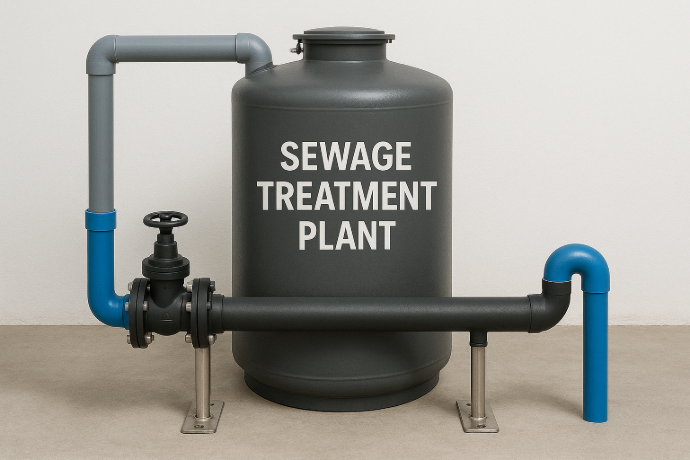
A Sewage Treatment Plant (STP) is a facility designed to treat wastewater or sewage generated from residential, commercial, and industrial buildings.
Ultra Violet Systems
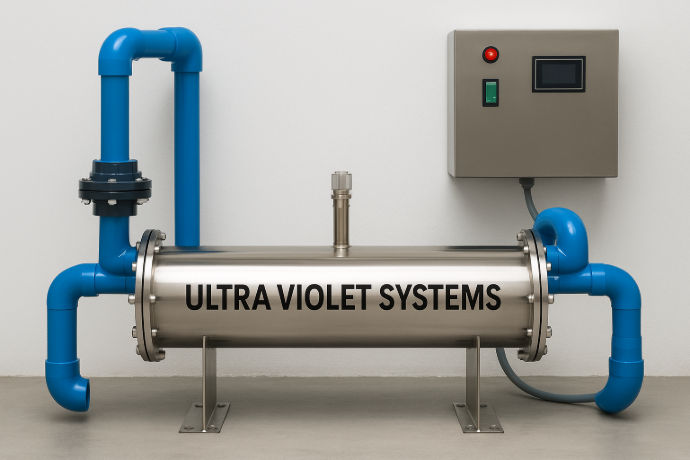
Ensure safe, chemical-free water with our advanced UV Water Disinfection Systems, designed to kill harmful bacteria, viruses, and pathogens without altering the taste or odor of your water.
Disc Filtration Systems
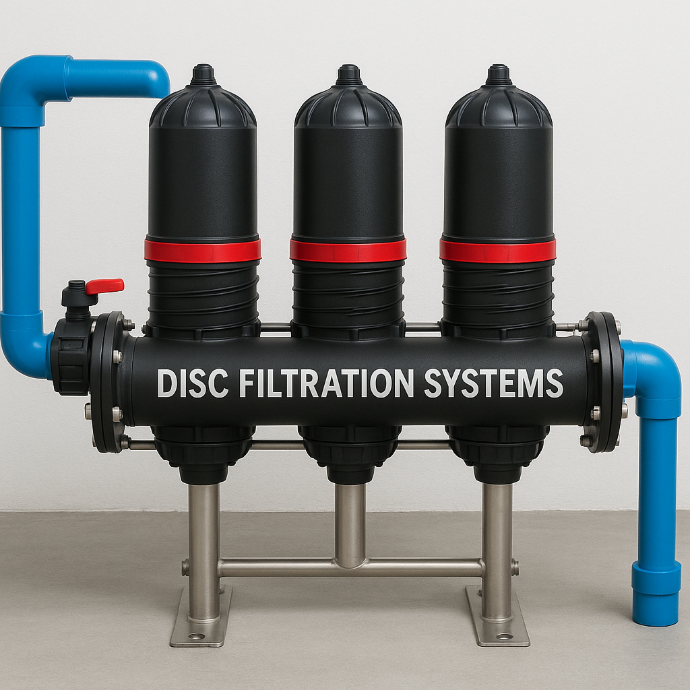
Our Disc Filtration Systems provide highly efficient, compact, and low-maintenance filtration solutions for removing suspended solids from water in both
industrial and commercial applications.
Sewage Treatment Plants
What is a Sewage Treatment Plant (STP)?
A Sewage Treatment Plant (STP) is a facility designed to treat wastewater or sewage generated from residential, commercial, and industrial buildings. Its primary function is to remove contaminants, organic matter, and harmful microorganisms from sewage, ensuring that the treated water meets environmental discharge standards or can be reused for non-potable applications.
The treatment process involves several stages:
Preliminary Treatment
Removal of large debris, such as plastics, rags, and sand, using screening and grit chambers
Primary Treatment
Settling tanks allow solid particles to settle at the bottom while oils and grease are skimmed from the surface
Secondary Treatment
Biological treatment using microorganisms to break down organic matter and reduce the biological oxygen demand (BOD).
Tertiary Treatment
Further polishing using filtration, chemical disinfection (chlorination), or ultraviolet (UV) treatment to remove residual contaminants.
Technologies Offered by JRK Corporation
JRK Corporation provides two advanced sewage treatment technologies tailored to meet the specific needs of residential, commercial, and industrial projects:
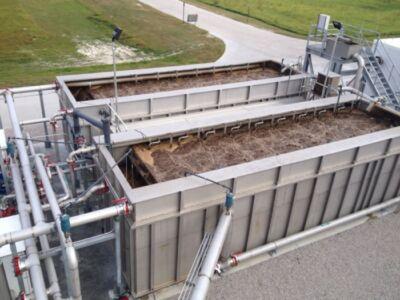
1. Fixed Activated Sludge Treatment (FAST)
• Process:
- FAST technology uses a fixed film media where microorganisms grow and break down organic matter in the wastewater.
- The media provides a large surface area for bacterial growth, which enhances the biological treatment process.
- Oxygen is supplied through aeration, supporting the growth of aerobic bacteria that effectively digest organic waste.
- FAST systems are known for their compact design, high treatment efficiency, and ability to handle shock loads.
• Advantages:
- ✅ High treatment efficiency with minimal footprint
- ✅ Fast start-up and stable operation under variable load conditions
- ✅ Low maintenance with automated operation
- ✅ Suitable for both small and large-scale installations
2. Membrane Bioreactor (MBR)
• Process:
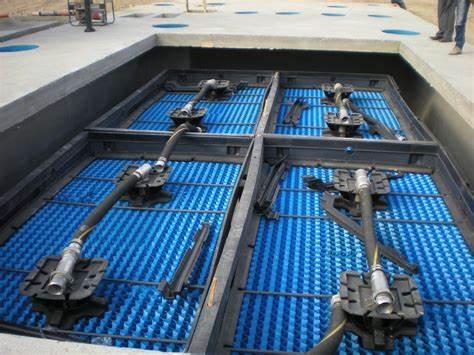
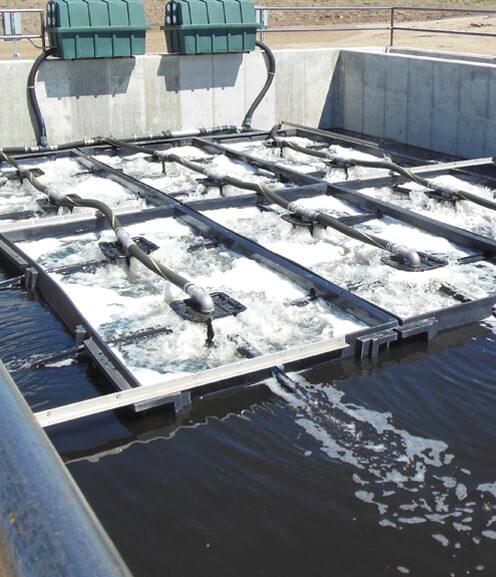
- MBR technology combines biological treatment with membrane filtration.
- Activated sludge is used for biological treatment, where microorganisms digest organic matter.
- The treated water is then passed through a membrane that separates solids and bacteria from the treated water.
- This results in high-quality treated water with low turbidity and high clarity.
• Advantages:
✅ Produces high-quality treated water suitable for reuse
✅ Compact design with a small footprint
✅ Reduced sludge production compared to conventional systems
✅ Effective removal of bacteria and pathogens without chemical disinfectants
Size and Capacity
JRK Corporation offers STPs in a wide range of capacities to meet various project requirements:
Applications of Sewage Treatment Plants
JRK Corporation’s STPs are ideal for a wide range of applications, including:
• Residential Complexes – Bungalows, Apartments, townships, and high-rise buildings.
• Commercial Buildings – Office complexes, hotels, and shopping malls.
• Industrial Facilities – Factories, processing plants, and manufacturing units.
• Healthcare and Educational Institutions – Hospitals, schools, and universities.
• Smart Cities and Townships – Large-scale urban development projects.
After-Use of Treated Water
The treated water from JRK Corporation’s STPs can be reused for various non-potable applications, reducing the demand for fresh water and supporting environmental sustainability:
• Irrigation: Treated water can be used for landscaping and gardening.
• Flushing: Suitable for toilet flushing in residential and commercial buildings.
• Cooling Towers: Used as make-up water for industrial cooling systems.
• Construction: Dust suppression and concrete curing.
• Cleaning: Washing of vehicles and paved surfaces.
After-Sales Support
JRK Corporation ensures long-term performance and customer satisfaction through reliable after-sales services:
• Installation and Commissioning: Professional setup by expert engineers.
• Training: On-site training for facility managers and staff.
• Maintenance Contracts: Regular maintenance and performance checks through Annual Maintenance Contracts (AMC).
• Spare Parts Supply: Fast availability of original spare parts to minimize downtime.
Ultra Violet Systems
Introduction to UV Systems
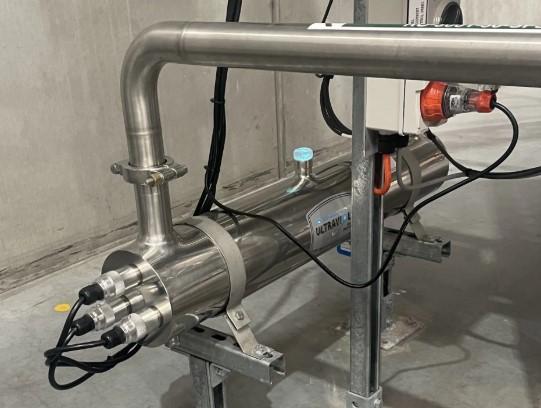
Ultra Violet (UV) Systems are advanced water disinfection solutions that use ultraviolet light to eliminate harmful microorganisms such as bacteria, viruses, and protozoa from water. UV treatment is a chemical-free method that effectively disinfects water without altering its taste, odor, or pH balance.
JRK Corporation offers high-performance UV disinfection systems. These systems are designed to provide consistent and reliable water disinfection for various residential, commercial, and industrial applications.
How UV Systems Work
UV Light Generation
The system generates UV light at a wavelength of 254 nanometers (nm), which is effective in disrupting the DNA of microorganisms.
Microorganism Inactivation
When water passes through the UV chamber, the UV light penetrates the cell walls of bacteria, viruses, and protozoa, disrupting their DNA and rendering them unable to reproduce or cause infections
Disinfection Without Chemicals
The process provides high-level disinfection without the use of chlorine or other chemical agents, making it environmentally friendly and safe.
Advantages of UV Systems
Highly Effective Disinfection
Eliminates 99.99% of harmful pathogens, including chlorine-resistant microorganisms like Cryptosporidium and Giardia.
Non-Chemical Treatment
No chemical by-products, no change in taste, odor, or pH of the water.
Environmentally Friendly
Reduces the need for chemical disinfection, lowering environmental impact.
Energy Efficient
Optimized UV lamp design minimizes power consumption while maximizing disinfection performance.
Consistent Performance
Real-time monitoring and control ensure consistent UV dose delivery under varying flow rates and water quality conditions.
Space-Saving Design
Compact, modular design allows for easy installation in limited spaces.
Low Maintenance
Minimal maintenance required, with long-lasting UV lamps and automated cleaning systems.
Easy Integration
Can be easily integrated into existing water treatment systems.
Uses of UV Systems
Atlantium UV systems are versatile and can be used for a wide range of applications:1. Municipal Water Treatment2. Industrial Water Treatment3. Wastewater Reuse4. Commercial Buildings5. Cooling Towers6. Swimming Pools and Recreational Facilities7. Hospitals and Healthcare Facilities
Disc Filtration Systems
Introduction to Disc Filtration Systems
Disc Filtration Systems are highly efficient water filtration solutions designed to remove suspended solids, organic matter, and fine particles from water. They use a series of stacked discs with precisely engineered grooves to trap and filter out contaminants, providing consistent and high-performance filtration.
JRK Corporation offers advanced Disc Filtration Systems known for reliability, efficiency, and low maintenance. These systems are suitable for various applications, including industrial, municipal, and commercial water treatment, where maintaining high water quality is essential.

How Disc Filtration Systems Work
Water Inflow
Raw water containing suspended solids and impurities is introduced into the filter housing.
Filtration Process
1.The water passes through a series of stacked plastic discs with fine grooves.
2. The discs are tightly compressed under pressure, creating a complex path that captures particles and contaminants based on size and shape.
Particle Retention
1. Particles larger than the groove size are trapped between the discs.
2. Clean water passes through to the outlet.
Automatic Backwashing
1. When the pressure differential across the system reaches a set point, the system automatically initiates a backwash cycle.
2. Water is reversed through the discs, expanding them and flushing out the trapped particles.
Advantages of Disc Filtration Systems
Capable of removing particles down to 10 microns with consistent performance.
Automatic backwashing ensures the system stays clean without manual intervention.
Space-saving design allows for easy installation and scalability.
Backwashing uses minimal water, improving overall system efficiency.
Discs are made from high-strength polymers resistant to chemicals and corrosion.
Operates at low pressure, reducing energy consumption.
Fewer moving parts and automated cleaning reduce maintenance requirements and operational downtime.
Even under fluctuating water quality and flow rates, the system maintains consistent filtration.
Uses of Disc
Filtration Systems
Disc Filtration Systems offered by JRK Corporation are versatile and suitable for a wide range of applications:
1. Municipal Water Treatment
2. Industrial Water Filtration
4. Cooling Towers
5. Wastewater Treatment
6. Desalination Plants
7. Food and Beverage Industry